
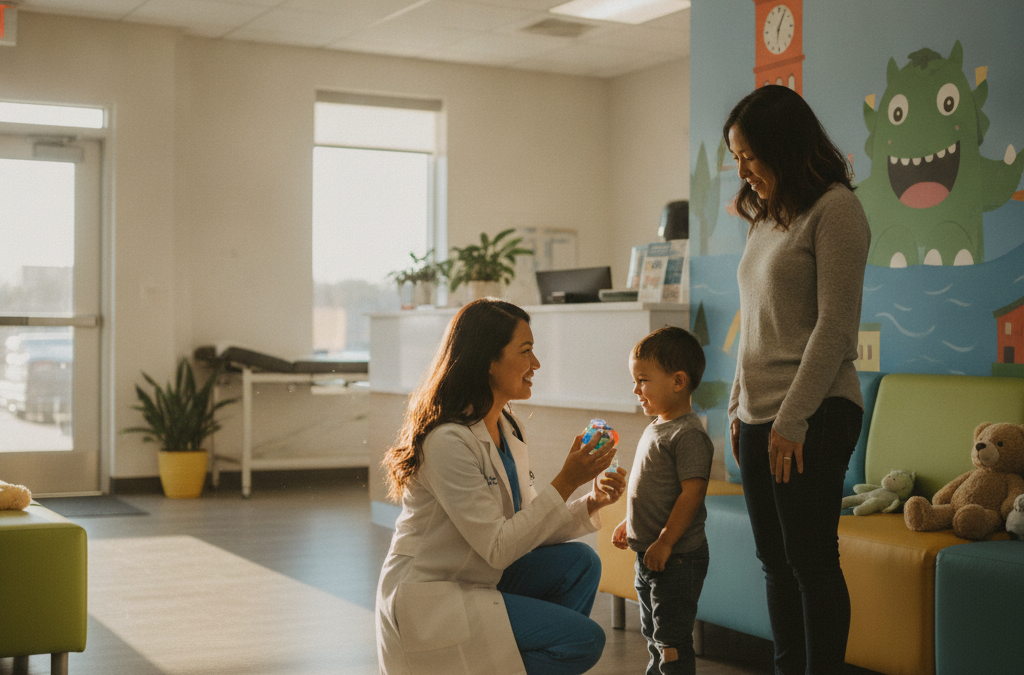
Can You Get a Pediatric Urgent Care Visit in Cleveland Heights or South Euclid Without Waiting Hours at the ER?
Yes — and for most childhood illnesses and minor injuries, you absolutely should. Parents in Cleveland Heights, South Euclid, University Heights, and the surrounding eastside suburbs have a genuinely better option than driving to a crowded emergency room every time their child has an ear infection, a fever, or a sprained ankle. Nextdoor Urgent Care & Primary Care on Mayfield Road welcomes walk-in pediatric visits, keeps waits short, and handles the most common reasons kids need to be seen quickly — without the ER price tag or the four-hour wait.
This guide covers what conditions walk-in pediatric urgent care can treat, what to bring, when the ER really is the right call, and what sets a neighborhood clinic apart from the large hospital-affiliated urgent care chains that dominate the area.
Why So Many Eastside Parents End Up at the ER — and Why That’s Often Not Necessary
It makes sense. When your six-year-old is miserable at 7 p.m. on a Thursday and your pediatrician’s office is closed, the ER feels like the safest choice. But emergency rooms are designed and staffed for true emergencies — trauma, severe breathing problems, heart events. A child with a 102-degree fever, a sore throat, or a swollen wrist from a playground fall is unlikely to be the highest priority in an ER triage system. That means long waits, exposure to genuinely sick patients, and a bill that’s often significantly higher than what a walk-in urgent care visit would cost.
For families in Cleveland Heights, Lyndhurst, Mayfield Heights, and nearby communities, the practical reality is that convenient after-hours pediatric care has historically meant one of three things: wait for the ER, hope for a same-day pediatrician slot, or do nothing and hope the child feels better by morning. A neighborhood urgent care clinic changes that calculation entirely.
What Conditions Can Pediatric Urgent Care Treat?
At Nextdoor Urgent Care & Primary Care, providers see children for a wide range of non-emergency illnesses and injuries. Common reasons parents bring their kids in include:
- Ear pain and suspected ear infections — one of the most common reasons children visit urgent care, especially in the fall and winter months when respiratory viruses circulate heavily across Cuyahoga County
- Sore throat and strep testing — rapid strep tests are available on-site, so you’re not waiting days to find out whether your child needs an antibiotic
- Fever — providers can evaluate the cause and help you understand what next steps make sense for your child’s age and symptoms
- Cough, congestion, and cold symptoms — especially relevant during Northeast Ohio’s long cold and flu season, which typically starts in October and runs well into March
- Flu and COVID testing — rapid testing is available on-site when these illnesses are circulating
- Pink eye (conjunctivitis)
- Minor cuts and lacerations that may need cleaning, closure, or evaluation
- Sprains, minor fractures, and injuries from falls — on-site X-ray means you don’t have to drive to a separate imaging center
- Rashes that aren’t improving or are accompanied by other symptoms
- Nausea, vomiting, and stomach pain that isn’t severe
Please call ahead or confirm current services if you’re unsure whether your child’s specific situation can be seen at the clinic.
When to Go to the ER Instead — No Exceptions
Urgent care is the right call for a wide range of childhood illnesses and injuries, but it is not a substitute for emergency care when a child’s life may be at risk. Call 911 or go to the nearest emergency room immediately if your child is experiencing any of the following:
- Difficulty breathing, rapid breathing, or lips or fingernails turning blue
- A seizure, especially if it’s the child’s first or lasts more than a few minutes
- Loss of consciousness or unresponsiveness
- High fever in infants under 3 months of age (call 911 or go to the ER — do not wait)
- Suspected poisoning or overdose
- Severe allergic reaction (hives spreading rapidly, throat swelling, trouble swallowing)
- Head injury with loss of consciousness, repeated vomiting, or confusion
- Severe abdominal pain
- Deep wounds with heavy or uncontrolled bleeding
When in doubt about a very young infant or a child with rapidly worsening symptoms, always err on the side of calling 911 or going to the ER. Urgent care providers will tell you the same thing.
What Large Urgent Care Chains Often Miss for Pediatric Patients
This is worth talking about plainly, because it’s a real gap that parents notice. Many of the large urgent care chains operating in the Cleveland area — the ones you’ll find in strip malls on major corridors — treat pediatric visits as an afterthought. Their websites often describe pediatric services in general terms without clarifying age ranges, wait time expectations, or whether their providers have experience working with children. You might show up with a frightened five-year-old and get a provider who is technically qualified but clearly more comfortable with adult patients.
A neighborhood clinic with a genuine pediatric focus approaches those visits differently. The pace is calibrated for a child who doesn’t want to sit still and a parent who is worried. The language is plain. The provider takes time to explain what they’re looking for, what they found, and what to watch for at home. That experience matters — especially when your child is already anxious and you’re already stressed.
On-Site Testing and X-Ray: No Extra Trip Required
One of the most practical advantages of choosing Nextdoor Urgent Care & Primary Care for your child’s visit is that rapid testing and on-site X-ray are available at the same location. For parents in South Euclid, Richmond Heights, Euclid, and Beachwood, this means you’re not driving from one location to an imaging center to a pharmacy — you handle it all in one stop. Strep results, flu results, and basic imaging happen during the same visit, so you leave with answers, not more waiting.
What to Bring to a Pediatric Urgent Care Visit
Bringing the right documents speeds things up and helps the provider give your child the best possible care:
- Your child’s insurance card (the clinic accepts Medicaid plans including CareSource and Molina — call ahead to confirm current coverage)
- A photo ID for the parent or guardian
- Your child’s immunization records if you have them available
- A list of any medications your child currently takes, including dosage
- Any relevant medical history — allergies, chronic conditions, prior surgeries
- Your child’s pediatrician’s contact information, in case the provider wants to coordinate follow-up care
If your child takes a comfort item — a stuffed animal, a favorite toy — bring it. Small things make a difference when a child is already not feeling well.
Self-Pay and Insurance Options for Pediatric Visits
Cost is a real concern for many families in the South Euclid and Cleveland Heights area. If your child is uninsured or you’re between insurance plans, self-pay options are available. The clinic does not require insurance to be seen, and the self-pay rates for urgent care visits are generally much more predictable than what you’d encounter at a hospital emergency room. Call the clinic or visit the self-pay information page to get a sense of what to expect before your visit.
For families covered by Medicaid — including CareSource and Molina — the clinic accepts Medicaid plans (verify current acceptance by calling ahead). You shouldn’t have to choose between your child’s health and your family’s budget.
Frequently Asked Questions: Pediatric Urgent Care Near Cleveland Heights and South Euclid
What age children do you see at Nextdoor Urgent Care?
Call the clinic at (440) 809-8650 to confirm the age ranges currently treated. For infants under 3 months with a fever or any sign of serious illness, go directly to an emergency room.
Do I need an appointment to bring my child in?
No — walk-ins are welcome. You can come directly to the clinic at 4515 Mayfield Rd in South Euclid without scheduling in advance. If you prefer to call ahead, the staff can give you a sense of current wait times.
Can urgent care treat a child’s ear infection and prescribe antibiotics if needed?
Yes. Providers can evaluate ear pain, confirm an infection if present, and prescribe appropriate treatment when clinically indicated. This is one of the most common pediatric visits at urgent care clinics across the area.
My child fell at school and their arm looks swollen — should I go to urgent care or the ER?
If the injury is an isolated swollen arm without open wounds, deformity suggesting a serious break, or signs of nerve damage, urgent care with on-site X-ray is a reasonable first step. If the arm appears severely deformed, the child cannot move their fingers, or there is significant blood loss, go to the ER. When in doubt, call the clinic and describe what you’re seeing — the staff can help you decide.
Can the urgent care provider send records to my child’s pediatrician after the visit?
Yes. The clinic can coordinate records with your child’s primary care provider. Bring your pediatrician’s contact information to help facilitate that follow-up.
Your Child Doesn’t Have to Wait for Care
Sick kids don’t follow a Monday-through-Friday, nine-to-five schedule, and neither should your access to care. Whether your child woke up with a fever, came home from school with a sore throat, or got hurt at a weekend soccer game in Lyndhurst or University Heights, Nextdoor Urgent Care & Primary Care is here to help — without an appointment, without the ER wait, and without making your family’s stressful day any harder than it needs to be.
To reach the clinic or get directions, visit our contact page or call us directly at (440) 809-8650. We’re located at 4515 Mayfield Rd in South Euclid, convenient to Cleveland Heights, University Heights, Lyndhurst, Richmond Heights, and the broader eastside Cuyahoga County area.
This article is for informational purposes only and does not constitute medical advice. If your child is experiencing a medical emergency, call 911 or go to the nearest emergency room immediately.