
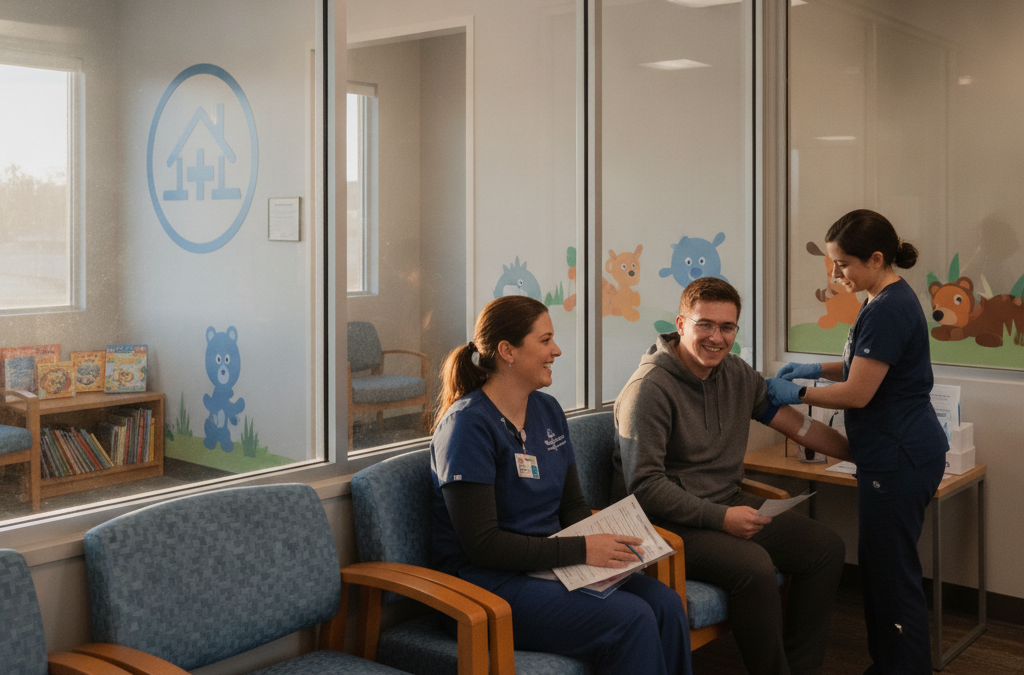
Can Nursing Students in Cleveland Heights Get Their Physical, TB Test, and Immunization Records Done in One Place?
Yes — and for nursing and allied health students in Cleveland Heights, South Euclid, and the surrounding eastside suburbs, being able to handle all of your program requirements under one roof is a bigger deal than it might sound. Most nursing programs require a completed physical exam, a tuberculosis test with documented results, and verified immunization records (sometimes with blood titer testing to prove immunity) before you can step foot in a clinical setting. Tracking down three separate appointments at three separate locations, often on a tight deadline before your program start date, is genuinely stressful. At Nextdoor Urgent Care & Primary Care on Mayfield Road in South Euclid, you can walk in and address all of these requirements in a single visit — or across two visits if your TB skin test requires a return reading.
Why Nursing Program Health Requirements Feel So Overwhelming
If you’ve just been accepted into a nursing, medical assisting, respiratory therapy, or other allied health program in Northeast Ohio — congratulations, and welcome to the paperwork. Most programs at community colleges, vocational schools, and university nursing departments across Cuyahoga County send new students a health requirements checklist that can run a full page. It typically includes some combination of the following:
- A physical exam completed by a licensed provider, often on a program-specific form
- A TB test (either a two-step PPD skin test or, in some cases, an interferon-gamma release assay blood test)
- Immunization records for MMR, varicella, hepatitis B, Tdap, and influenza
- Titer results for one or more vaccines, proving your immunity is active — especially for MMR, varicella, and hepatitis B
- Documentation of your COVID-19 vaccination status (varies by program)
Pulling all of this together — especially if your childhood immunization records are incomplete or from out of state — takes coordination. And programs are not forgiving about deadlines. Missing your clinical clearance submission date can delay your start by an entire semester.
What to Bring to Your Nursing School Physical Visit
The most important thing you can do before your visit is gather what you already have. This saves time and may save you money on duplicate testing.
- Your program’s physical exam form. Download it directly from your school’s nursing or health sciences department. Most providers will not complete a form they haven’t seen, and your program may not accept a generic physical summary in its place.
- Any immunization records you have. Even partial records help. If your hepatitis B series is documented, your provider won’t need to restart it. Bring whatever you have — vaccination cards, old school health forms, records from a pediatrician.
- A list of current medications and known health conditions. The physical exam for nursing school is similar in scope to a standard annual physical, covering your general health history, vital signs, vision, hearing, and fitness for clinical work.
- Your student ID or program acceptance letter, if your program requires it to be referenced on the form.
Call ahead to confirm that your specific program form can be completed at the visit: (440) 809-8650.
The TB Test Piece: What Nursing Students Need to Know
TB testing for nursing programs is one of the most commonly misunderstood parts of the process. Here’s what actually happens:
Most programs require a two-step TB skin test (PPD) for students who have no documented TB testing history within the past year. A two-step test involves two separate skin tests placed one to three weeks apart, with each one requiring a return visit 48 to 72 hours after placement to have the result read and documented. This process exists because the first test can “boost” a weakened immune response, making the second test more accurate for people who may have been exposed to TB in the past — which is a reasonable concern for anyone entering a healthcare setting.
If you’ve had a documented negative TB skin test within the past 12 months, many programs will accept a one-step test as the follow-up. And some programs now accept a blood-based TB test (IGRA) as an alternative to the skin test — which requires only one visit and no return reading appointment. Call us to ask which options are available and which your specific program accepts.
The key point: start your TB testing early. If you need a two-step PPD, you’re looking at a minimum of three weeks from start to finish. Don’t begin this process the week before your paperwork is due. You can learn more about the testing process on our TB testing page.
Immunizations and Titers: The Part That Trips Students Up Most
This is where most nursing students lose the most time — and where most competitor urgent care networks and large hospital system websites offer the least practical guidance.
Many students assume that if they received a vaccine as a child, they’re covered. That may be true, but nursing programs often require documented proof of immunity through blood titer testing, not just a vaccination record. A titer is a blood test that measures whether your body has actually developed sufficient antibodies for a given disease. Even if you received all three doses of the hepatitis B vaccine, your titer might come back as non-immune — which means your program will require you to repeat part or all of the series before you can begin clinicals.
Common titers requested by nursing programs include:
- Hepatitis B surface antibody (anti-HBs)
- MMR immunity (measles, mumps, rubella antibodies)
- Varicella (chickenpox) antibody
Our on-site lab can draw titers during your physical visit. Results timelines vary by test, so ask at check-in about turnaround so you can plan around your program’s submission deadline. If a titer comes back non-immune, we can also discuss next steps for catch-up vaccines — just call to confirm current vaccine availability before your visit. You can find more information on our immunizations page.
Who We See: Eastside Students and Healthcare Program Applicants
We’re centrally located on Mayfield Road, which makes us an easy stop for students coming from Cleveland Heights, University Heights, Lyndhurst, Euclid, Beachwood, and Mayfield Heights. If you’re enrolled in or accepted to a program at Cuyahoga Community College, Ursuline College, Notre Dame College, Cleveland State, or any of the healthcare training programs in Cuyahoga County, our clinic is well within reach — and we’re available for walk-in visits without a scheduled appointment.
Many of our nursing school patients are self-pay, since student health insurance often doesn’t cover occupational-type health clearances. We offer transparent self-pay options and can give you a clear picture of what your visit will include before you check in. If you do carry insurance, call us to confirm what’s covered. We also see patients with Medicaid plans including CareSource and Molina — coverage for specific services varies, so it’s worth a quick call before your visit.
Frequently Asked Questions: Nursing School Physicals in the Cleveland Heights and South Euclid Area
How long does the whole nursing school clearance process take?
It depends on whether you need a one-step or two-step TB test and whether any titer results come back requiring follow-up vaccines. At minimum, budget two to three weeks if a two-step PPD is required. If you have complete records and only need a physical and titer draw, it can go faster. Start early — do not wait until the week your paperwork is due.
Can I walk in without an appointment for my nursing school physical?
Yes, walk-ins are welcome at Nextdoor Urgent Care & Primary Care. That said, if you’re coming in for a physical exam, TB test, and blood draw in the same visit, calling ahead at (440) 809-8650 gives us a heads-up and helps ensure we have everything ready for you.
What if my program requires a form I need the provider to fill out?
Bring the form with you. Most nursing programs have their own physical exam documentation form that must be completed by the examining provider — a generic physical note or summary may not be accepted. We’ll do our best to complete your program’s specific form during the visit.
What if my hepatitis B titer comes back non-immune?
Your provider will review your options with you, which may include one or more additional vaccine doses followed by a repeat titer after a waiting period. This is common and manageable — just make sure you leave enough lead time before your program’s deadline. Call us to ask about vaccine availability.
Do you treat nursing students who have Medicaid or no insurance?
Yes. We see patients with Medicaid plans including CareSource and Molina, and we have self-pay options for those without insurance. Call us before your visit to confirm what’s covered under your specific plan and to get a clear sense of self-pay costs for each service you need.
Ready to Get Your Clearance Done?
If you’re a nursing or allied health student in Cleveland Heights, South Euclid, University Heights, or anywhere on the eastside of Cuyahoga County, don’t let your program health requirements pile up until the last minute. Walk in to Nextdoor Urgent Care & Primary Care at 4515 Mayfield Road in South Euclid, or call us at (440) 809-8650 to ask about timing, what to bring, and what your visit will include. You can also visit our contact page to reach us online.
We’re here to make your clearance process straightforward — so you can focus on starting your program, not chasing paperwork.
This content is for informational purposes only and is not a substitute for professional medical advice, diagnosis, or treatment. Always follow your nursing program’s specific requirements and consult with a licensed provider about your individual health needs.