
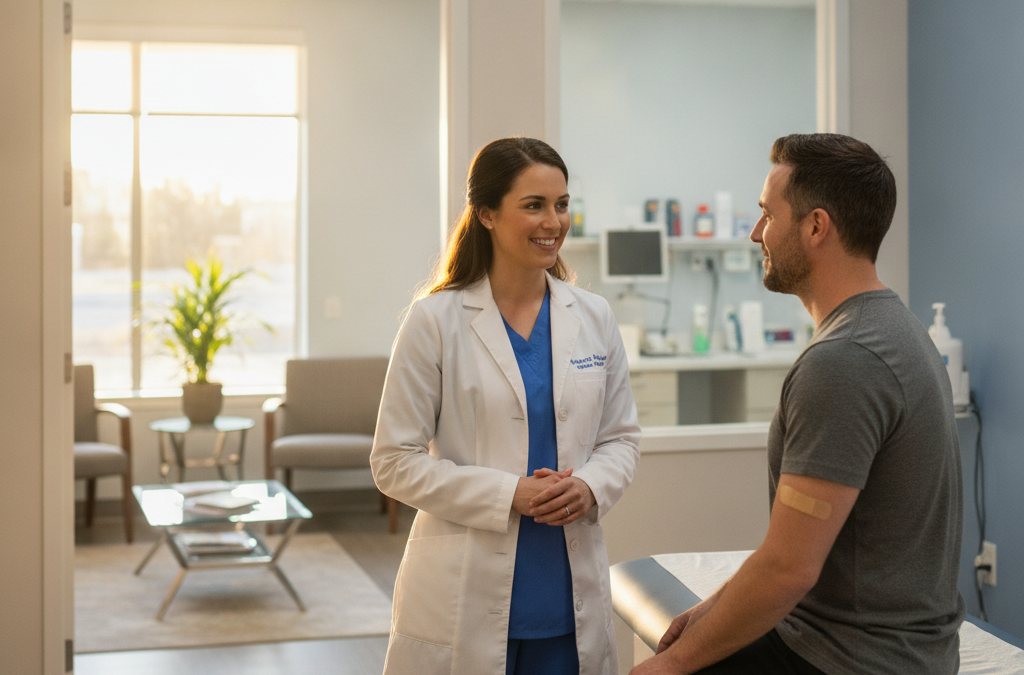
What Should Berea and Middleburg Heights Residents Know About Getting Stitches at Urgent Care — vs. the ER?
A bad cut is stressful. Whether it happened in the kitchen, on the job, or during a weekend project, your first instinct is probably to stop the bleeding — and your second is to figure out where to go. For most lacerations, the answer isn’t necessarily the emergency room. Residents of Berea, Middleburg Heights, and surrounding communities can often get prompt, professional laceration care at a walk-in urgent care clinic — typically with shorter wait times and lower out-of-pocket costs. Here’s a clear, practical breakdown of what to expect, when urgent care is the right call, and when you really do need the ER.
When a Cut Can Be Treated at Urgent Care
Most lacerations that people bring to emergency rooms every year are actually within the scope of what a well-equipped urgent care clinic can handle. If your wound has the following characteristics, an urgent care visit is likely appropriate:
- The bleeding is controllable with steady pressure
- The cut is on an extremity, the scalp, chin, or other surface area (not the face near the eye, inside the mouth, or over a joint requiring specialist evaluation)
- There are no signs of a deeper injury — such as exposed bone, tendon, or nerve damage
- You are otherwise stable — no dizziness, rapid heart rate from blood loss, or signs of shock
- The wound is less than several hours old (fresh wounds close more cleanly)
At Nextdoor Urgent Care & Primary Care in Brook Park, our providers can evaluate your laceration, clean the wound, and determine the best closure method — whether that’s traditional sutures, staples, wound strips, or tissue adhesive. We also have on-site X-ray available if there’s a concern about a foreign object in the wound or an underlying fracture that might have occurred at the same time.
When You Should Go Straight to the ER
There are situations where urgent care is not the right setting — and it’s important to be honest about that. Please call 911 or go to the nearest emergency room immediately if:
- Bleeding is severe and not responding to pressure
- The wound is on the chest, abdomen, or neck
- You suspect a puncture wound from an animal bite or contaminated object that may require deeper evaluation
- There are signs of nerve or tendon damage — numbness, inability to move the affected area normally
- The injured person has lost consciousness, shows signs of significant blood loss, or is in severe pain beyond what the wound alone explains
- The laceration involves the eye or is a complex facial wound requiring plastic surgery evaluation
Urgent care exists to help you avoid unnecessary ER visits — but never at the cost of appropriate care. If you’re unsure, err on the side of caution and get evaluated in the right setting.
What Happens During a Laceration Visit at Urgent Care
If you walk into our Brook Park clinic with a cut that needs attention, here’s a straightforward picture of what to expect. You’ll check in at the front desk — no appointment needed — and a provider will assess the wound. They’ll clean the area, evaluate depth and edges, and decide on the closure technique best suited to your situation.
If there’s a chance something is embedded in the wound — glass, metal, gravel — or if you had a fall that might have also caused a fracture, we can image the area right here on-site without sending you somewhere else. That’s a meaningful advantage compared with clinics that rely on outside imaging centers, especially when you’re already dealing with discomfort and just want answers quickly.
After closure, you’ll receive wound care instructions, information about signs of infection to watch for, and guidance on when to follow up or have sutures removed. Most visits for straightforward lacerations move efficiently — you’re not sitting for hours the way you might in a hospital ER waiting room.
The Cost and Insurance Picture — What Berea and Middleburg Heights Families Should Know
One of the most common questions people ask — often after the fact — is why a laceration at the ER cost so much more than they expected. Emergency departments bill at a facility rate that is structurally higher than urgent care, even for the same procedure. If you have insurance, your ER copay is typically significantly higher than an urgent care copay. If you’re uninsured or underinsured, the difference can be substantial.
We accept a range of insurance plans, including Medicaid plans such as CareSource and Molina, which are common among families in Cuyahoga County. We encourage you to call ahead or confirm your coverage — our team can help clarify what to expect. If you’re unsure whether your plan covers the visit, don’t let that uncertainty push you toward delaying care for a wound that genuinely needs attention.
A Gap in Competitor Content: What Closure Method Will My Wound Actually Need?
If you search around on large urgent care or hospital system websites, you’ll find plenty of general information about lacerations — but very little practical explanation of what different closure methods actually mean for the patient. That leaves people anxious and uninformed. Here’s a plain-language overview:
- Sutures (stitches): Thread-like material used to close a wound and hold edges together while healing occurs. Depending on the type used, they may need to be removed in 5–14 days, or they may dissolve on their own.
- Staples: Often used for scalp lacerations or straight cuts on low-tension areas. Faster to place, generally effective, and removed at a follow-up visit.
- Wound closure strips (Steri-Strips): Adhesive strips applied across the wound for smaller, low-tension cuts. No removal needed — they fall off on their own as the wound heals.
- Tissue adhesive (skin glue): A medical-grade adhesive that bonds wound edges together. Works well for small, clean cuts, particularly in children who may not tolerate sutures well.
Your provider will choose the method based on the wound’s size, location, depth, and your medical history. There’s no single right answer for every cut — that’s why evaluation by a trained provider matters rather than trying to close a wound at home with over-the-counter supplies.
Workplace Cuts and Workers’ Comp in the Brook Park Area
The Brook Park and Berea corridor has a high concentration of manufacturing, logistics, and airport-adjacent employers — industries where hand and arm lacerations from equipment, materials handling, or slips are a real occupational hazard. If your cut happened on the job, your employer may have a designated provider for workers’ compensation care.
Nextdoor Urgent Care & Primary Care handles work injury care, including laceration treatment, wound documentation, and the paperwork that employers and insurance carriers need to initiate a claim. Getting evaluated promptly — and at a clinic that understands the workers’ comp process — makes the path forward simpler for both you and your employer. You can learn more about our workers’ comp and work injury services before your visit.
Frequently Asked Questions
How do I know if a cut actually needs stitches or if I can just bandage it at home?
General signs that a wound may need closure include: gaping edges that don’t stay together on their own, a cut deeper than about a quarter inch, bleeding that doesn’t slow with sustained pressure after 10–15 minutes, or a wound on the face, hands, or over a joint. When in doubt, have it evaluated — a provider can tell you quickly whether closure is needed.
Can I walk into urgent care in Brook Park for a laceration without an appointment?
Yes. Nextdoor Urgent Care & Primary Care welcomes walk-ins for laceration and wound care. You do not need to call ahead, though you’re welcome to call with questions before you come in.
What if my child is the one who is injured — can urgent care treat kids with cuts?
Yes. Our providers regularly treat pediatric lacerations and are experienced in making the process as calm and efficient as possible for younger patients. Tissue adhesive is often a good option for children when the wound is appropriate for it.
Will I need a tetanus shot when I get stitches at urgent care?
Your provider will ask about your vaccination history. If your tetanus booster is not current and the wound type warrants it, they can administer one at the same visit. Bring a list of your current vaccinations if you have it available.
Does urgent care in Brook Park have X-ray if I think I also broke something when I got cut?
Yes. We have on-site X-ray available, so if there’s concern about a fracture in addition to the laceration — common with falls or impacts — we can image the area without sending you to a separate facility.
Ready to Be Seen? Come In or Give Us a Call
If you or a family member in Berea, Middleburg Heights, Olmsted Falls, North Olmsted, Parma, or anywhere in Cuyahoga County has a cut that needs professional attention, you don’t have to spend hours in an emergency room to get good care. Nextdoor Urgent Care & Primary Care is located in Brook Park on Snow Road — convenient to I-480 and the communities west and south of Cleveland Hopkins — and we welcome walk-in patients every day.
Call us at (216) 385-0281, or contact us online to confirm current hours before you head in. We’ll take good care of you.
This article is for informational purposes only and is not a substitute for professional medical advice, diagnosis, or treatment. If you are experiencing a medical emergency — including severe bleeding, difficulty breathing, or loss of consciousness — call 911 or go to the nearest emergency room immediately.