
Can Walk-In Urgent Care in Brook Park Actually Treat a Laceration — or Should You Go to the ER?
You just sliced your hand in the kitchen, caught a sharp edge on a piece of equipment at work, or took a bad spill on an icy Brook Park sidewalk — and now you’re staring at a cut that’s clearly going to need more than a bandage. Your first instinct might be to drive straight to a hospital emergency room. But here’s what many Cuyahoga County residents don’t realize: a large number of lacerations can be treated quickly and thoroughly at a walk-in urgent care clinic — often with shorter waits, lower out-of-pocket costs, and the same quality of wound care you’d expect anywhere else.
At Nextdoor Urgent Care & Primary Care on Snow Road in Brook Park, our providers treat cuts and lacerations regularly — including wound cleaning, closure with stitches or other methods, and on-site X-ray when there’s any concern about a deeper injury underneath. Here’s how to know whether your cut is the right fit for urgent care, and when you absolutely need to call 911 or head straight to an emergency room.
When a Cut Is an Urgent Care Situation — Not an ER Emergency
Most lacerations that need professional attention don’t require the full resources of a hospital emergency department. Walk-in urgent care is generally appropriate when your wound:
- Is bleeding but can be slowed with steady pressure
- Is longer than about half an inch or has edges that aren’t staying together on their own
- Is located on a hand, arm, leg, foot, face, or scalp — areas where proper closure matters for both healing and appearance
- Occurred in a setting that increases infection risk (outdoor fall, workplace, animal scratch or bite)
- Happened more than a few hours ago and you’re unsure whether it still needs closure
- Is causing pain, swelling, or numbness around the wound site
These are exactly the situations our team handles every day. You don’t need an appointment — just walk in, let the front desk know what happened, and a provider will evaluate your wound and recommend the right course of care.
When You Should Call 911 or Go to the Emergency Room Instead
Some lacerations are genuine emergencies, and urgent care is not the right setting for them. Please call 911 or go directly to an emergency room if your cut involves any of the following:
- Bleeding that is heavy, spurting, or not slowing down after 10–15 minutes of firm, direct pressure
- A wound that is very deep or may have exposed bone, tendon, or muscle
- A laceration on the neck, chest, abdomen, or face near the eye
- Signs of significant nerve or tendon damage (inability to move fingers or toes normally after a hand or foot injury)
- A wound caused by a high-force impact, like a serious fall, vehicle accident, or machinery
- Any laceration accompanied by loss of consciousness, dizziness, or difficulty breathing
When in doubt, call 911. Urgent care providers will always be upfront with you if a wound is beyond what the clinic can safely manage — your safety comes first.
What Laceration Care at a Brook Park Urgent Care Clinic Actually Looks Like
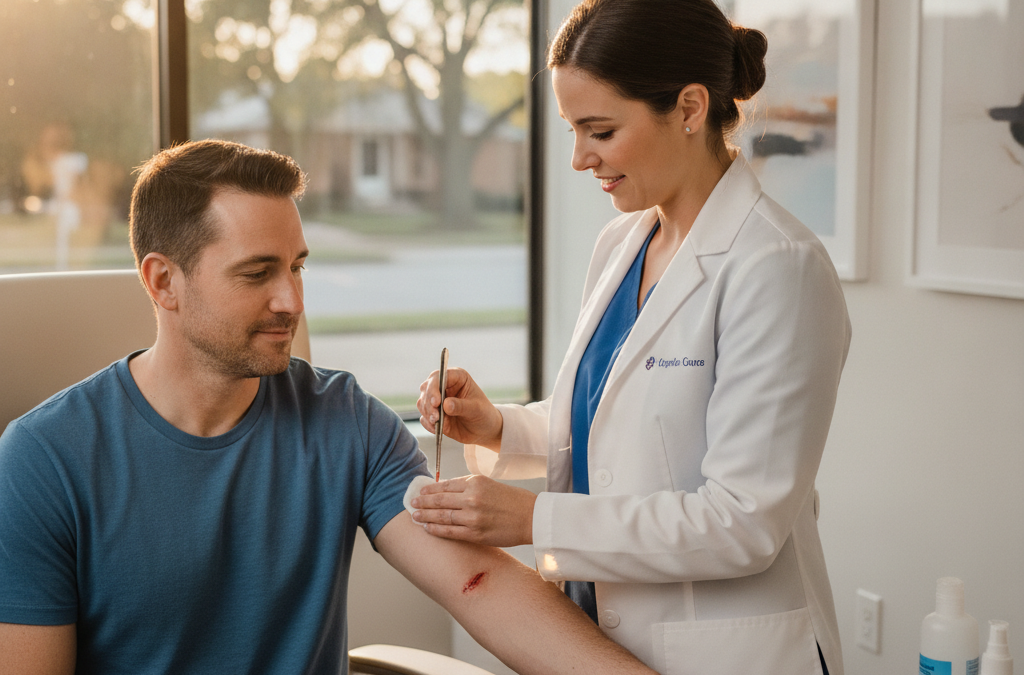
A lot of people have never been to urgent care for a wound before, so they’re not sure what to expect. Here’s a general sense of how the visit typically goes at Nextdoor Urgent Care & Primary Care:
Step 1: Check In and Initial Assessment
You walk in — no appointment needed. A staff member will note what happened and get you registered. A provider will assess the wound: its depth, length, location, and whether the edges can be brought together cleanly. They’ll also ask how it happened, when it happened, and whether you’re current on your tetanus vaccination. This is also the time to mention any medications you take, allergies to anesthetics or antibiotics, or any conditions like diabetes that can affect healing.
Step 2: Cleaning and Wound Prep
Before any closure, the wound is thoroughly irrigated and cleaned. This step matters more than most people realize — proper cleaning reduces the risk of infection significantly, especially for cuts that happened outdoors, in a kitchen, or in an industrial or warehouse environment. Northeast Ohio’s winters mean a lot of slip-and-fall injuries on ice and gravel, and those wounds often carry debris that needs to be carefully flushed out.
Step 3: Closure — Stitches and Other Options
Depending on the wound’s size, location, and depth, your provider will choose the appropriate closure method. Traditional sutures (stitches) are common, but providers may also use wound closure strips or skin staples depending on the specific situation. The goal is to bring wound edges together cleanly to support healing and minimize scarring. Local anesthetic is typically used so the process is as comfortable as possible.
Step 4: On-Site X-Ray When Needed
This is a step that many patients don’t think to ask about — and one where local urgent care can genuinely outperform a simple telehealth visit or a quick trip to a retail health clinic. If your laceration happened during a fall or impact injury and there’s any concern about a fracture underneath, our on-site X-ray services mean you don’t have to make a separate trip to an imaging center. We can take a look at the bone structure right here, right now, and factor that into your care plan before you leave.
Step 5: Wound Care Instructions and Follow-Up
Before you head out, you’ll receive clear written instructions for caring for the wound at home — how to keep it clean and dry, when to change the dressing, signs of infection to watch for, and when to return for suture removal if needed. If a tetanus booster is indicated based on your history, that can often be handled at the same visit.
The Gap That Competitors Often Miss: Wound Care for Workers
Here’s something worth noting if you’re a worker or an employer in the Brook Park, Parma, or Berea area: most large urgent care chains and hospital-system urgent care pages give almost no practical guidance on workplace laceration care — specifically around workers’ compensation documentation, return-to-work timelines, and what happens if the injury occurred on the job.
At Nextdoor Urgent Care & Primary Care, we treat a lot of work-related lacerations. The Cleveland Hopkins airport corridor, surrounding logistics hubs, and Cuyahoga County’s manufacturing sector mean that hand injuries, forearm lacerations, and impact wounds from equipment are genuinely common. If your cut happened at work, we can provide workers’ comp-appropriate documentation and connect your care to the work injury services your employer needs — without requiring you to navigate a separate occupational medicine appointment first. Walk in, get treated, and we’ll make sure the paperwork is handled correctly from the start.
What to Bring and What It Typically Costs
For a laceration visit, bring your insurance card and a valid photo ID. If you’re treating a work injury, let the front desk know at check-in so your visit is handled through the appropriate workers’ comp process. We accept a range of insurance plans — call ahead at (216) 385-0281 or visit our insurance page to confirm your specific coverage before you come in.
If you’re paying out of pocket, laceration care at an urgent care clinic is generally significantly less expensive than an emergency room visit for the same type of wound. We don’t publish specific prices here because costs vary based on the complexity of care, but our team is upfront about what your visit will involve and will answer billing questions at the front desk.
Frequently Asked Questions About Laceration Care Near Brook Park
How long can I wait before a cut needs stitches?
Most wounds are best closed within 6–8 hours of the injury. After that window, the risk of infection increases and some wounds may no longer be appropriate for traditional closure. If it’s been longer than a few hours, come in anyway — a provider can assess whether closure is still appropriate or recommend wound care to support healing without sutures.
Can urgent care handle cuts on my hand or fingers?
Yes, in most cases. Hand lacerations are among the most common wounds we see. The provider will assess the wound’s depth and whether there’s any concern about tendon or nerve involvement. If the injury is complex and requires a hand surgery specialist, we’ll let you know and help coordinate the appropriate next step.
Do I need a tetanus shot after a cut?
It depends on how long it’s been since your last tetanus booster and the nature of the wound. Puncture wounds, cuts from rusty or dirty objects, and wounds with contamination carry higher tetanus risk. Your provider will ask about your vaccination history and recommend a booster if it’s indicated — we can administer it at the same visit.
Will urgent care treat a laceration that happened at work in Middleburg Heights or Olmsted Falls?
Absolutely. Workers’ comp patients are welcome at our Brook Park clinic. Let the front desk know at check-in that the injury occurred at work, have your employer’s workers’ comp insurance information if available, and we’ll handle the documentation appropriately from there.
Does Nextdoor Urgent Care accept walk-ins for lacerations, or do I need an appointment?
Walk-ins are always welcome — no appointment needed. If you’re dealing with a wound that needs attention today, just come in. We’ll get you evaluated and treated as quickly as possible.
Walk In Today — No Appointment Needed
If you or someone in your family has a cut that needs professional attention, don’t wait. Nextdoor Urgent Care & Primary Care is located at 15900 Snow Rd, Suite 302 in Brook Park — easy to reach from Parma, Berea, Middleburg Heights, Olmsted Falls, and the broader west side of Cleveland. Walk in any time during our open hours and we’ll take care of you.
For non-emergency questions or to confirm hours before you come in, call us at (216) 385-0281 or visit our contact page. And remember: if you’re ever dealing with a wound that involves uncontrolled bleeding, a suspected serious injury, or any symptoms that feel truly alarming — call 911 or go to the nearest emergency room. We’ll always be honest with you about what level of care your situation requires.
The content on this page is for informational purposes only and is not a substitute for professional medical evaluation or advice. If you are experiencing a medical emergency, call 911 immediately.