
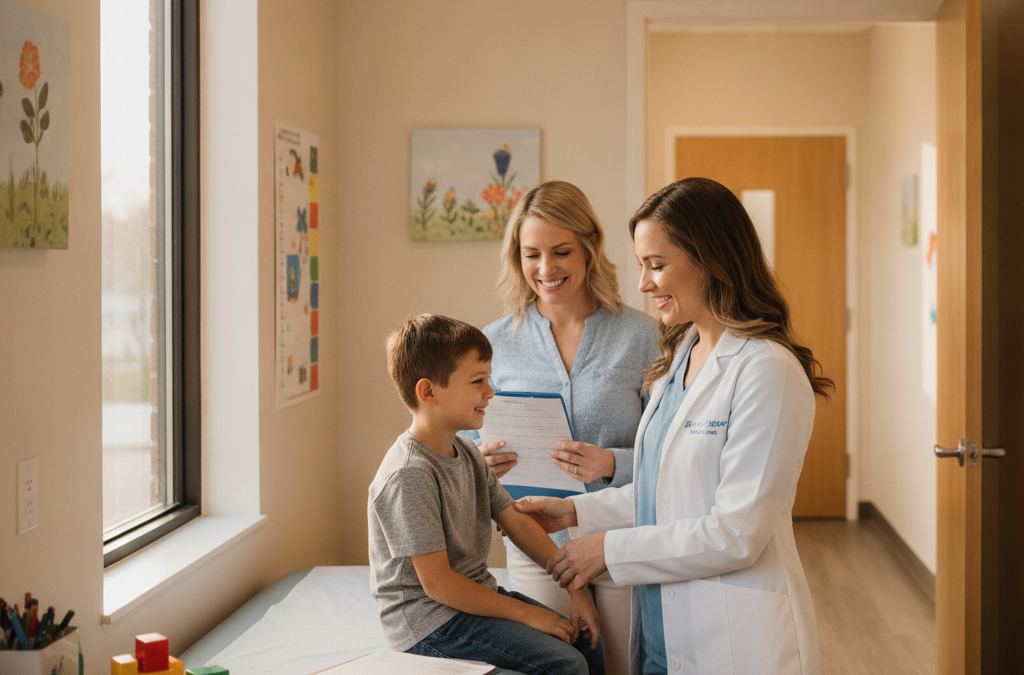
Can You Get a Sports Physical in Beachwood or South Euclid for Spring Sports Without Waiting Until the Last Minute?
Yes — and if your child is trying out for a spring sport in Beachwood, South Euclid, Lyndhurst, Mayfield Heights, or anywhere else on Cleveland’s eastside, the time to get their physical done is well before the first practice. At Nextdoor Urgent Care & Primary Care on Mayfield Road in South Euclid, walk-in sports physicals are available without an appointment, so your athlete doesn’t miss a single day of play because the paperwork wasn’t ready in time.
Why Spring Sports Physicals in Northeast Ohio Catch Parents Off Guard Every Year
It happens every late winter across Cuyahoga County — the snow is barely gone, tryout notices go home in backpacks, and suddenly every pediatrician’s office within fifteen miles has a two-week wait for a physical. Parents in Beachwood, University Heights, Richmond Heights, and Highland Heights know the feeling. The Ohio High School Athletic Association (OHSAA) requires a completed pre-participation physical evaluation (PPE) before student-athletes can participate in interscholastic athletics, and schools enforce it. No physical on file, no practice — it’s that simple.
Spring sports seasons typically include track and field, baseball, softball, tennis, lacrosse, volleyball, and golf. Tryouts and official practices can begin as early as mid-February for some programs. If your child is a sophomore trying out for the baseball team or a freshman who just discovered a love for lacrosse, the window between “I want to play” and “practice starts Monday” can be very short.
What Does a Sports Physical Actually Check?
A pre-participation physical exam — sometimes called a PPE or sports physical — is a focused medical evaluation designed to assess whether a student-athlete is healthy enough to participate safely in organized sports. It is not the same as an annual wellness exam, though the two are sometimes confused. The sports physical concentrates on areas most relevant to athletic participation:
- Cardiovascular screening — listening to the heart and checking blood pressure, with questions about family history of heart conditions or sudden cardiac events in young relatives
- Musculoskeletal review — evaluating joints, flexibility, strength, and any prior injuries that might affect safe return to activity
- Height, weight, and vital signs — basic measurements that help establish a health baseline
- Vision check — a basic visual screening to ensure the athlete can safely participate
- Medical history review — questions about asthma, prior concussions, seizures, diabetes, heat-related illness, or any conditions requiring attention before full clearance
- General health assessment — reviewing any medications, allergies, or concerns the parent or student wants to discuss
The goal is to catch anything that might put your child at increased risk during physical activity — not to disqualify kids from playing, but to make sure they play safely. Providers do not guarantee clearance; the outcome of the exam depends entirely on what the evaluation finds.
What Form Does Your Child Need — and What Should You Bring?
This is where parents often show up unprepared, and it costs time. Ohio uses a standardized pre-participation physical evaluation form, and most schools either provide this form or accept the Ohio-standard version. Before your visit to Nextdoor Urgent Care & Primary Care, do the following:
- Get the form from your child’s school or athletic office. Some schools in Beachwood, Lyndhurst, Mayfield Heights, and Cleveland Heights have their own forms or supplemental pages — confirm with the athletic director or coach what is accepted.
- Complete the medical history section before you arrive. This is typically the parent-and-student portion of the form covering past illnesses, surgeries, medications, and family history. Having it filled out saves time and helps the provider focus the exam on what matters.
- Bring your child’s immunization records. Schools may request documentation of vaccinations alongside the physical — having records on hand avoids a second trip.
- List any current medications or supplements your child takes, including over-the-counter products, vitamins, or any inhalers.
- Note any prior injuries or conditions — especially concussions, broken bones, joint surgeries, or any episodes where your child fainted, had chest pain, or felt their heart racing during exercise.
When in doubt about which form is accepted, call your school’s athletic office first, then call us. We want your child’s physical to be accepted on the first try — not returned because a school-specific page was missing.
Can You Walk In, or Do You Need an Appointment?
At Nextdoor Urgent Care & Primary Care, walk-ins are welcome for sports physicals. You do not need a scheduled appointment. This matters a lot when tryouts are five days away and your child’s pediatrician can’t fit them in until next month. Our clinic at 4515 Mayfield Road in South Euclid serves families from Beachwood, Lyndhurst, University Heights, Highland Heights, and all along the Cedar Road and Mayfield Road corridors — often with shorter waits than a traditional practice or hospital-affiliated clinic.
That said, arriving earlier in the day generally means a shorter wait. If your schedule allows, weekday mornings or early afternoons tend to be less busy than the after-school rush.
You can learn more about what to expect at our physicals page, or call us directly to ask about current wait times before you head over.
What If Your Child Has a Known Condition?
Many athletes in Northeast Ohio play sports with well-managed conditions like asthma, mild scoliosis, prior knee injuries, or controlled diabetes. Having a known condition does not automatically mean your child cannot be cleared to play — but it does mean the provider will want to review it carefully. Bring any relevant records, specialist notes, or treatment summaries to the visit. If your child has had a recent surgery or is managing a condition that required a specialist, it may be helpful to have documentation from that provider as well.
If your child has a condition that is currently unstable, uncontrolled, or under active evaluation, please consult their specialist or primary care provider before the sports physical. Our team can evaluate what they find and discuss next steps, but the exam result depends entirely on the clinical picture at the time of the visit.
Is a Sports Physical the Same as an Annual Physical?
Not exactly, and this distinction matters. A sports physical is focused narrowly on athletic participation readiness. An annual or preventive physical covers a broader range of health topics — developmental milestones, mental health screenings, immunization updates, and more. If your child is due for both, it may be worth asking about combining them, or scheduling a primary care visit to ensure nothing gets missed.
Nextdoor Urgent Care & Primary Care also offers primary care and family medicine services and is accepting new patients. If your family is between providers or hasn’t established care with a local doctor, this is a good time to get connected with ongoing care — not just a one-time physical.
Frequently Asked Questions: Spring Sports Physicals in Beachwood and South Euclid
How long does a sports physical take at Nextdoor Urgent Care?
Most sports physicals are completed efficiently — typically within 30 to 45 minutes of being seen by a provider, depending on the complexity of your child’s health history. Total time in the clinic varies based on how busy we are that day.
Does my child need to fast or prepare anything special before the visit?
No fasting is required for a standard sports physical. Make sure your child is rested and not in acute illness the day of the visit. If they are currently sick with fever or an active infection, it’s better to reschedule once they’re feeling well.
Will my insurance cover a sports physical?
Many insurance plans, including Medicaid plans like CareSource and Molina, cover preventive physicals — but coverage for sports-specific physicals varies. We recommend calling your insurance provider before your visit to confirm. We also offer self-pay options for families without insurance or who prefer to pay out of pocket. Visit our self-pay page for more information, or call us to ask about current rates.
What if the form isn’t signed — can the school still accept it?
No. Schools require both the provider’s signature and documentation that the exam was completed by a licensed provider. Make sure you leave with a fully completed and signed form before you go. We will not send forms after the fact — the signed original goes home with you at the visit.
My child plays a club sport, not a school sport. Do they still need a physical?
Many club leagues, travel teams, and recreational organizations require pre-participation physicals just as schools do — sometimes with their own forms. Check with your league or club coordinator for their specific requirements, then bring the appropriate form to your visit.
Don’t Wait Until the Week of Tryouts
Every spring, the same story plays out across Beachwood, South Euclid, Mayfield Heights, and the surrounding eastside communities — kids who want to play are stuck on the sidelines because the physical didn’t get done in time. It’s a preventable frustration, and it’s one of the most common reasons families come to us in a rush.
Getting the physical done early gives your child time to address anything that comes up at the exam, get any needed documentation from specialists, and start the season without scrambling. It also gives you peace of mind that your athlete is ready to go.
Nextdoor Urgent Care & Primary Care is located at 4515 Mayfield Road in South Euclid, convenient to families throughout Beachwood, Lyndhurst, University Heights, Highland Heights, Richmond Heights, Cleveland Heights, and beyond. Walk-ins are welcome — no appointment needed.
Call us at (440) 809-8650 or visit our contact page to reach us directly. We’re here to help your athlete get cleared and get out on the field.
This article is for informational purposes only and is not a substitute for professional medical advice, diagnosis, or treatment. If your child is experiencing a medical emergency, call 911 or go to the nearest emergency room.